Mausoleum
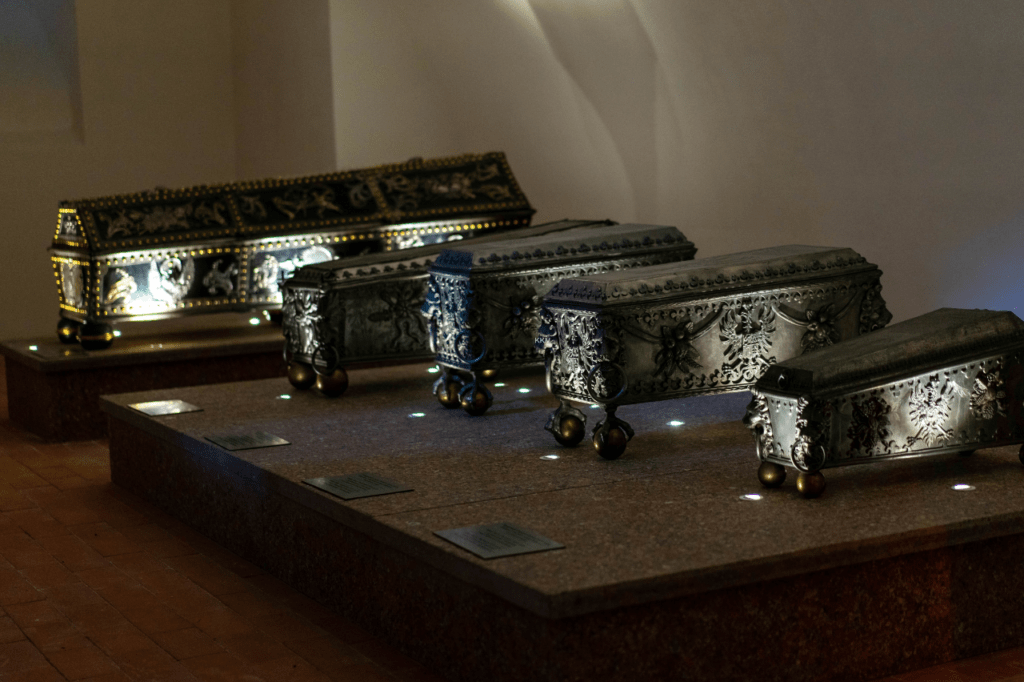
The Radvila Princes’ Mausoleum – a branch of the Kėdainiai Regional Museum. The crypt in the Evangelical Reformed Church (mid-17th century) was restored in 1995, whilst the restoration of the unique 17th-century sarcophagi of the Radvila princes was completed in April 2001. This is the first 17th-century burial site of nobles of the Grand Duchy of Lithuania to be restored in Lithuania, situated in one of the oldest and largest Protestant churches in the entire former Polish-Lithuanian Commonwealth. The mausoleum houses six unique 17th-century monuments of national significance in the fields of art and history – those of the Dukes Kristupas Perkūnas (1547–1603), Jonušas (1612–1655), Mikalojus (1610–1611), Jurgis (1616–1617), Steponas (1624–1624) and Elžbieta (1622–1626) Radvila. The church houses an exhibition detailing the history of the Evangelical Reformed Church in Kėdainiai, the members of the Radvila family buried in the mausoleum, and the restoration of the sarcophagi.
Stonehenge
In 1995, the geographical centre of Lithuania (55°19’ N and 23°54’ E) was officially established in the village of Ruoščiai and marked with a large field stone. Based on a design by architect Vytautas Kundrotas, two further stones were brought in to symbolise Samogitia and Aukštaitija. A new marker was installed in 2009. A granite plaque bearing the engraved coordinates of the geographical centre was placed on top of the stones.
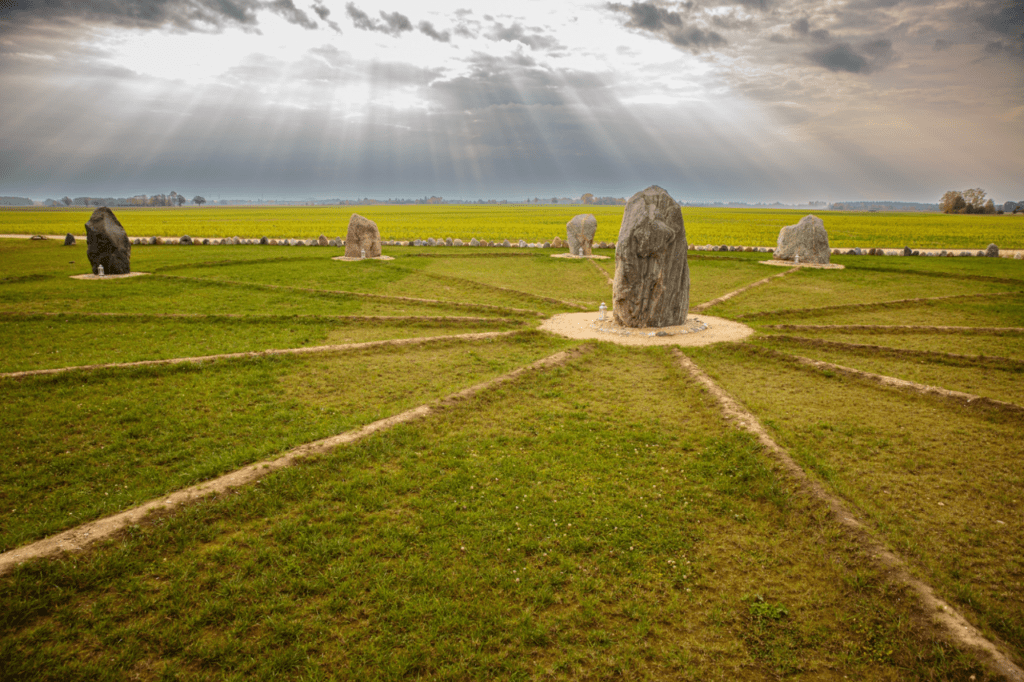
In 2021, a structure reminiscent of Stonehenge, called the ‘Flower of Love and Peace’, was created at the geographical centre of Lithuania – a circle of twelve large field stones, each 36 metres in diameter, with a thirteenth stone standing at its centre.
Kėdainiai Regional Museum
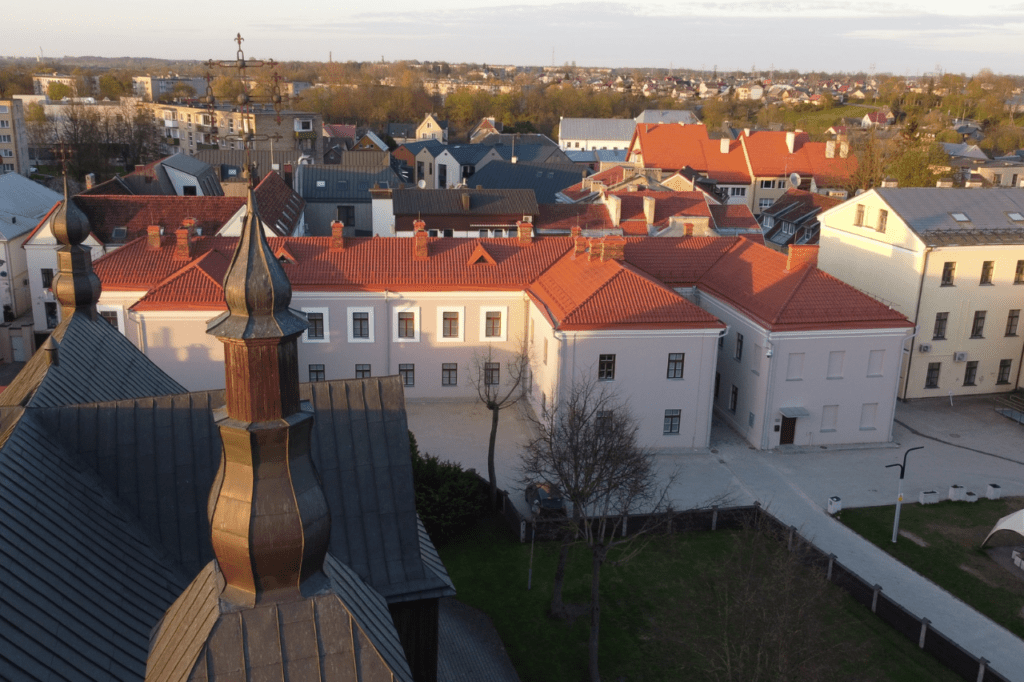
The Kėdainiai Regional Museum and Multicultural Centre offers a wide variety of educational sessions covering history, art, ethnoculture, Jewish cultural heritage and multiculturalism, aimed at children and adults of all ages. Several in-depth educational programmes have been developed, incorporating guided tours and hands-on activities at architectural sites. Visitors also have the opportunity to try on Renaissance-style clothing and adorn themselves with 19th-century manor accessories. Further information can be found on the museum’s website.
In 2019, new interactive exhibitions were installed at the museum. With the help of 3D glasses, you will have the opportunity to take part in the first battle of the Lithuanian War of Independence, which took place near Kėdainiai. The interactive model ‘The Golden Age of Kėdainiai in the 17th Century: As Told by the Town’s Residents’ will introduce you to life in Kėdainiai in the 17th century. You will hear the stories of a Reformed and Lutheran priest, a Catholic woman, a Scotsman, a schoolboy, a dog and some Jewish people.
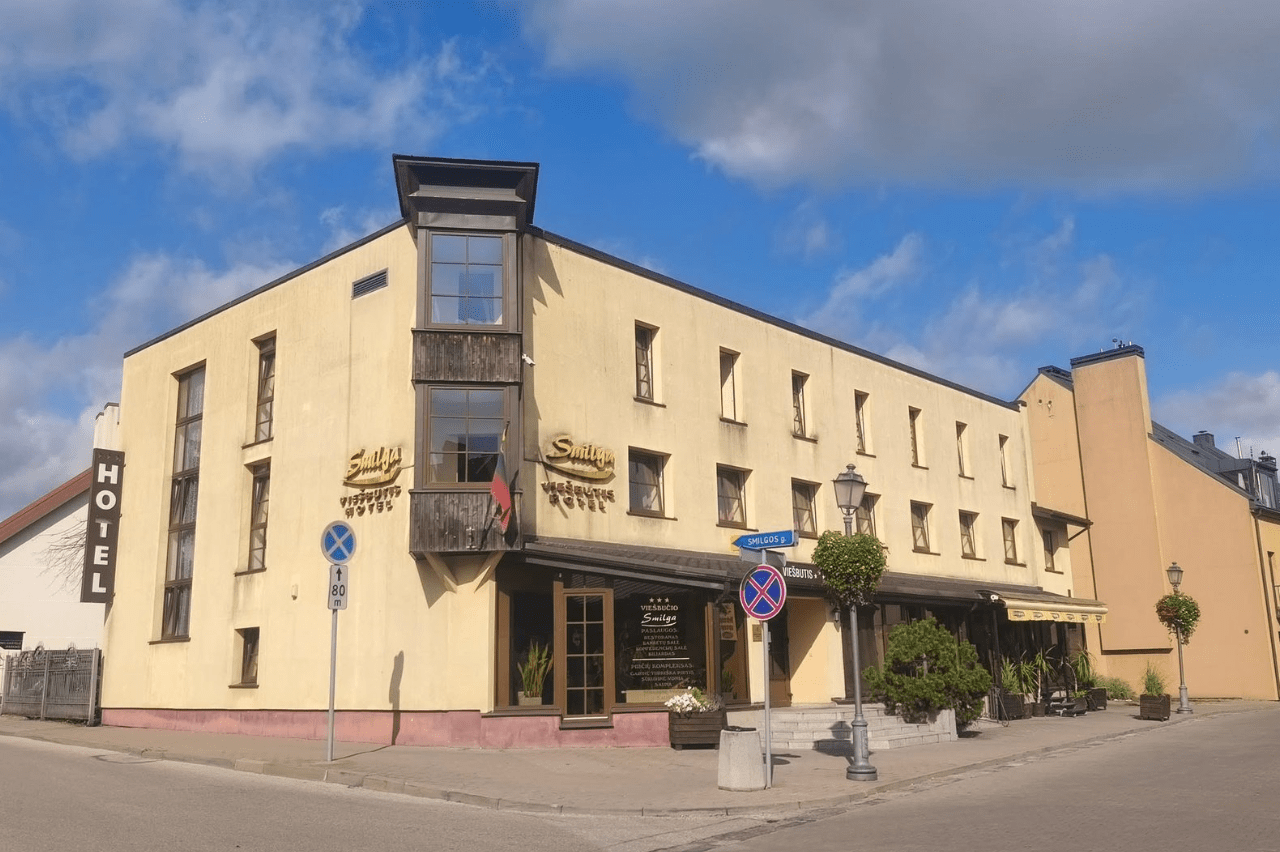
Kėdainių senamiestis
Kėdainiai Old Town is a state-protected monument of urban architecture, one of only seven in Lithuania. The Old Town boasts a number of well-preserved buildings featuring elements of the Gothic, Renaissance, Baroque and Classical styles, four market squares dating from the 15th to 17th centuries, and a historic network of streets. The town’s history dates back to 1372, when the name Kėdainiai was first mentioned in Hermann von Vartberg’s Livonian Chronicles. Until the 16th century, it grew and developed haphazardly; in the 16th century, planning began in accordance with the Valakų Reform.
Kėdainiai’s Old Town is an open-air museum that tells the rich history of the town and of Lithuania. There are no cheap props here – only what is authentic, genuine and unadulterated, what has survived from past centuries to the present day. A visit to Kėdainiai’s Old Town offers an unforgettable historical experience, as strolling through its winding streets is like walking through a 17th-century town. The unique fabric of the Old Town reflects the legacy of the colourful, multi-ethnic communities that once lived here, the spirit of the Radvila noble family, and significant events in the history of both Kėdainiai and Lithuania.
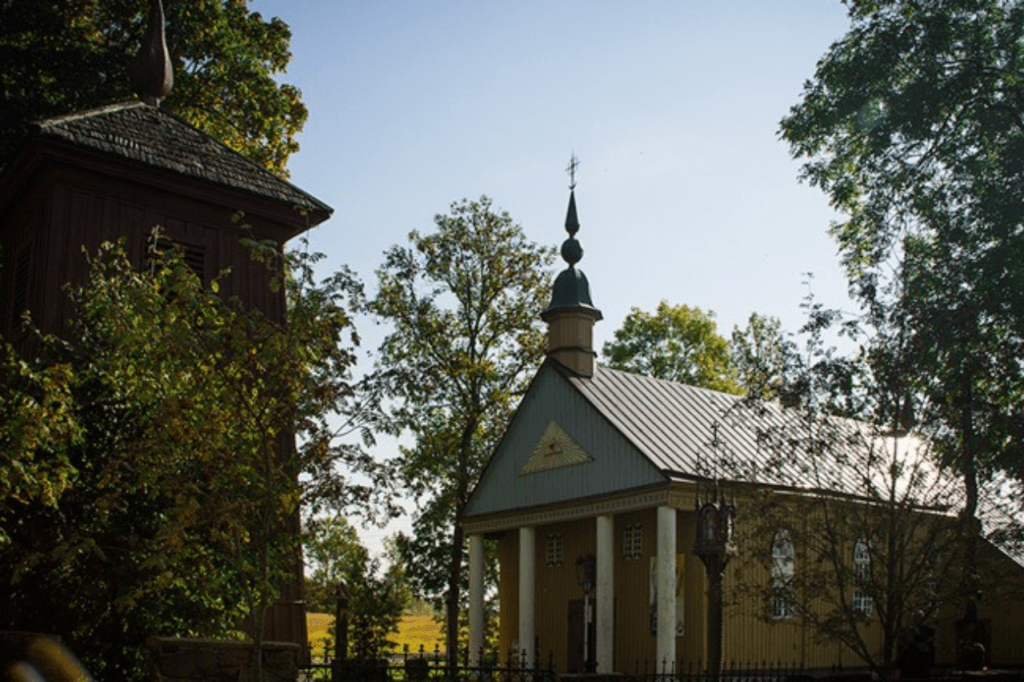
The religious complex in Paberžė
Paberžė was long renowned as a place of pilgrimage, as the Capuchin friar Algirdas Mykolas Dobrovolskis – Father Stanislovas – served as a priest there. Thanks to him, the small village became a centre of attraction – people from all over Lithuania would come to listen to his sermons and discuss life. Today, the Church of the Visitation of the Blessed Virgin Mary, the granary and the vicarage are filled with liturgical and household items, which Father Stanislovas collected and referred to as ‘treasures’. The church (1787), built by folk craftsmen, is rich in sacred artefacts, including crosses by Vincas Svirskis, and its centrepiece is an altar carved from wood. The former Šilingas Manor (18th century) houses the only museum in Lithuania dedicated to the 1863 Uprising. The Paberžė Landscape Reserve was established to preserve historical and cultural monuments, as well as the natural complex of the Liaudės and Nykio stream valleys.
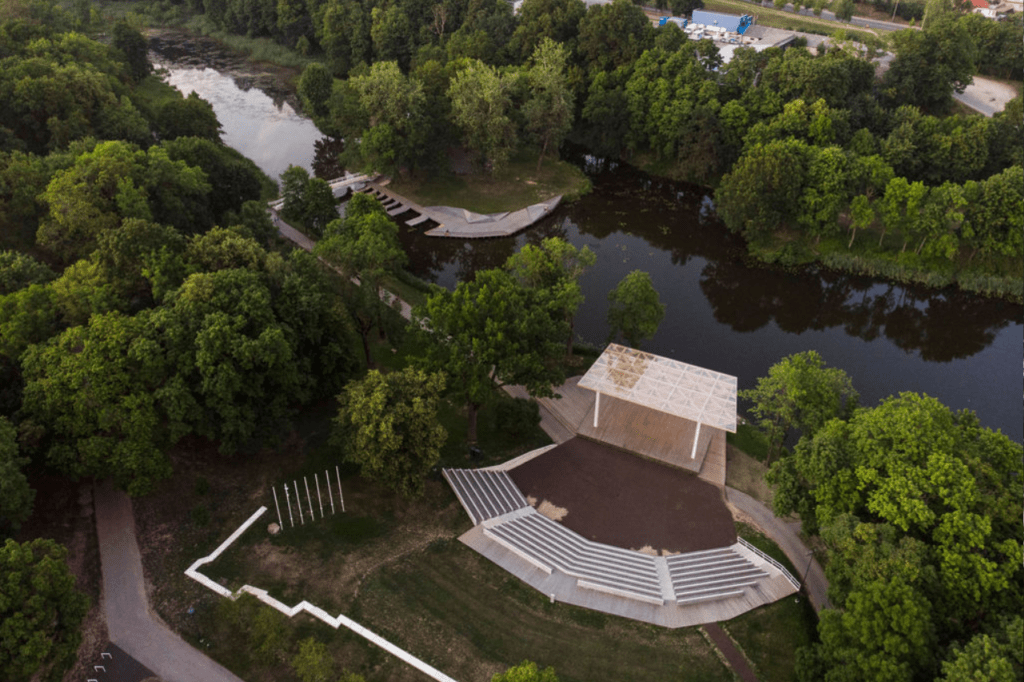
The city park and the minaret
Kėdainiai Town Park is situated on the site of the former Kėdainiai manor complex. The surviving part of the manor complex consists of a minaret, the south and north cellars, the gates and the park. When Kėdainiai came into the possession of Count Pranciškus Čapskis, a Pole of German descent, in 1811, he established the manor complex on the site of the former Radvila farmstead. M. Hutenas Čapskis widened the Dotnuvėlė River, constructed ponds, created islands, built bridges and laid out the park. Following the 1863 uprising, the manor was confiscated from Čapskis and passed to Count Eduard Totleben, a general in the Russian army of German descent. E. Totleben reconstructed the manor house, redesigned the park and, around 1880, erected a 28-metre-high minaret in memory of the Crimean War. One legend has it that the general built it for his Muslim wife; another claims he had the exotic structure built for his mistress; a third states that the minaret was brought from the Bulgarian city of Pleven: there, during the Russo-Turkish War of 1877–1878, the general would often visit it and, when tired, would doze off on its steps. Most likely, the structure was built out of a sentimental attachment to the Balkans. From the minaret, the owner of Kėdainiai and its surroundings would show guests the park and his estates. In the mosque and the iwan, the general kept objects commemorating his past. The minaret is 28 metres high. Over time, it became a romantic meeting place. In 1944, the palace was blown up by the Germans. The minaret, the gates, parts of the cellars and the 19th-century landscaped park have survived. The park features footpaths and cycle paths, and the former parterre has been restored and planted with roses. The main entrance to the park is from J. Basanavičiaus Street. To reach the park from the railway station, cross the level crossing – you will find yourself right next to the minaret.
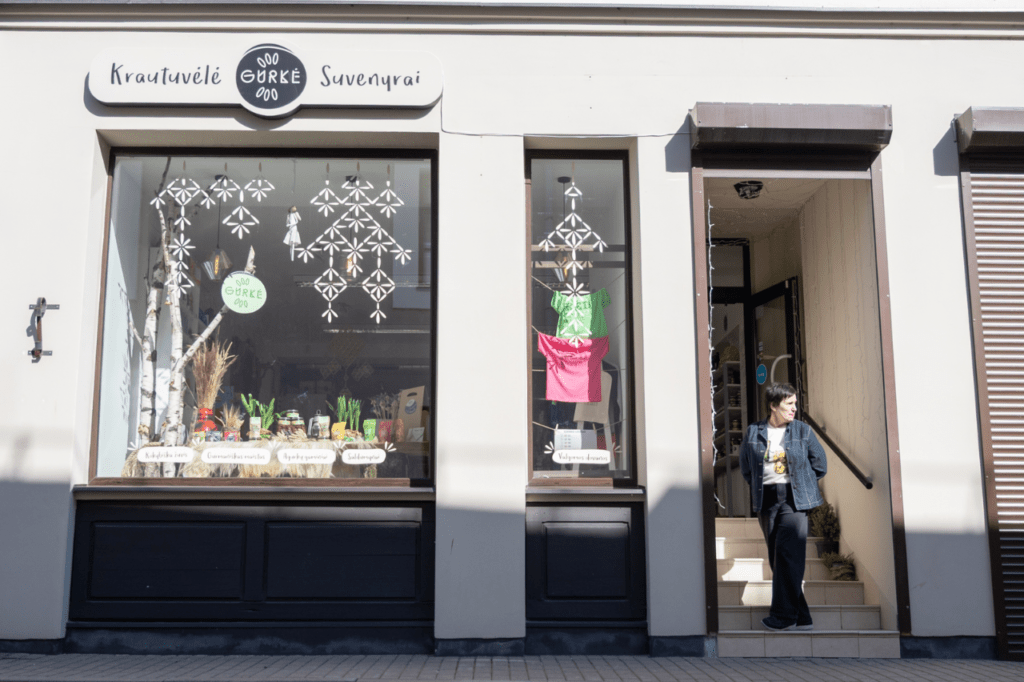
Gurkė
Cucumber products: cucumber jam, cucumber mead, condiments with cucumber, freeze-dried cucumbers in chocolate, cucumber marshmallows, cucumber ice lollies…
“Gurkė” forklift – This is a place where tradition and modernity intertwine, where you can discover new flavours and take a little piece of Lithuania home with you. The shop takes pride in having revived culinary tourism centred on Kėdainiai gherkins – cucumber jam, cucumber marshmallows, freeze-dried cucumbers in chocolate, cucumber condiments, cucumber soap and cream.
In the shop, you’ll find a wide variety of local food products that reflect Lithuanian cuisine and flavours. Tourists in Kėdainiai will also be delighted by the handmade souvenirs – textiles, wax products, magnets and badges.
Skinderiškio parkas
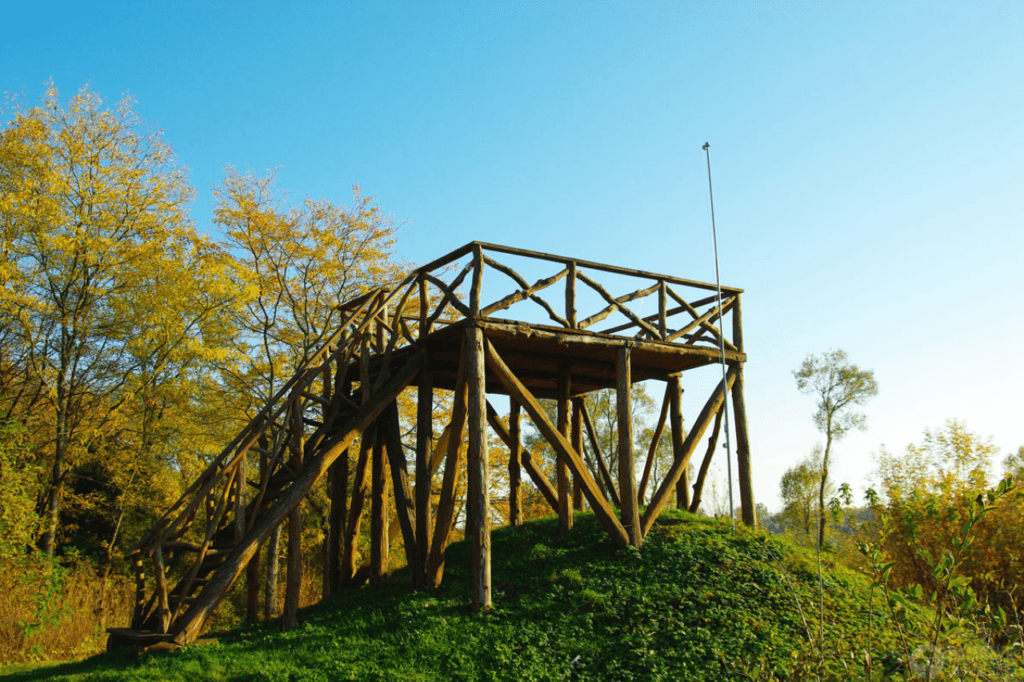
In the heart of Lithuania, at the junction of the Samogitian Uplands and the Central Lowlands, alongside the meandering Šušvė River, lies the Skinderiškis Arboretum. It covers an area of 125 hectares and is organised according to the geographical zones of origin of the plants. The arboretum takes its name from the many species of exotic trees, shrubs and vines growing there, brought from various parts of the world and usually cultivated only in botanical and arboretums. There are 1,300 species, subspecies, varieties, forms and cultivars of trees, shrubs and lianas growing here. The park features gazebos and benches. The park’s founder was Kęstutis Kaltenis (1935–2022), who was awarded the Valdas Adamkus Prize in 1993. Admission is free, and the park is open 24 hours a day.
Mikalojaus Daukšos ąžuolas
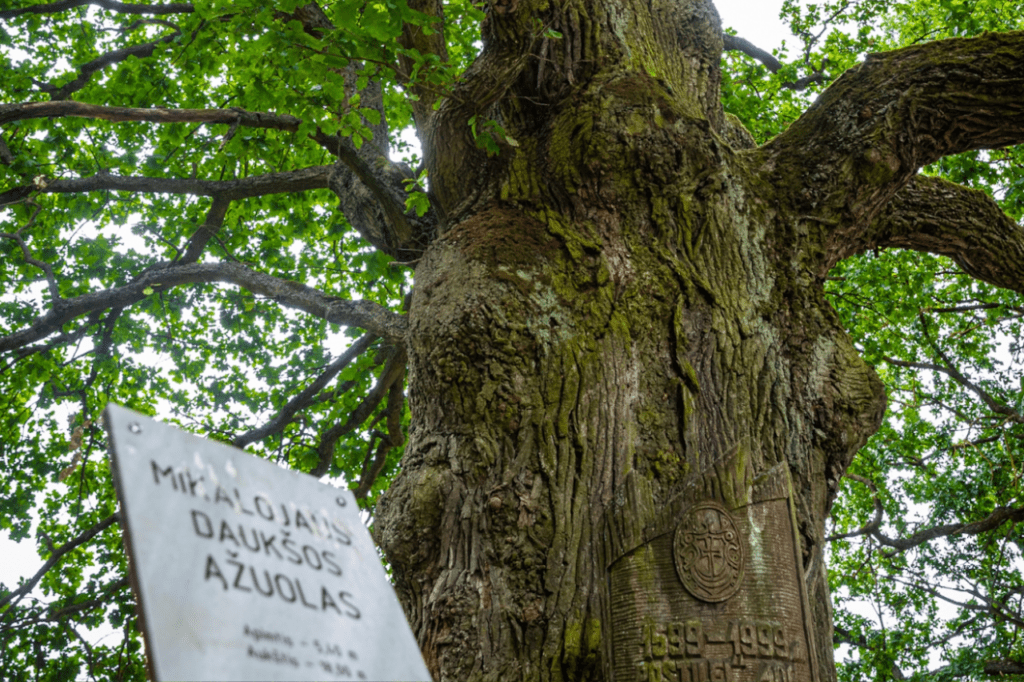
This is the oldest oak tree in the town of Kėdainiai (circumference – 5.4 m, diameter – 1.70 m, height – 23 m). It is said that it was planted by Mikalojus Daukša, the pioneer of Lithuanian literature, who was born in Babėnai, near Kėdainiai. M. Daukša was a prominent figure in the development of Lithuanian literature. He was an educator, a proponent of humanist ideas, a defender of the rights of the native language in the 16th century, and one of the first creators of the Lithuanian literary language, who laid the foundations for literature in the Grand Duchy of Lithuania.
Vincas Svirskis ir Kėdainių kraštas
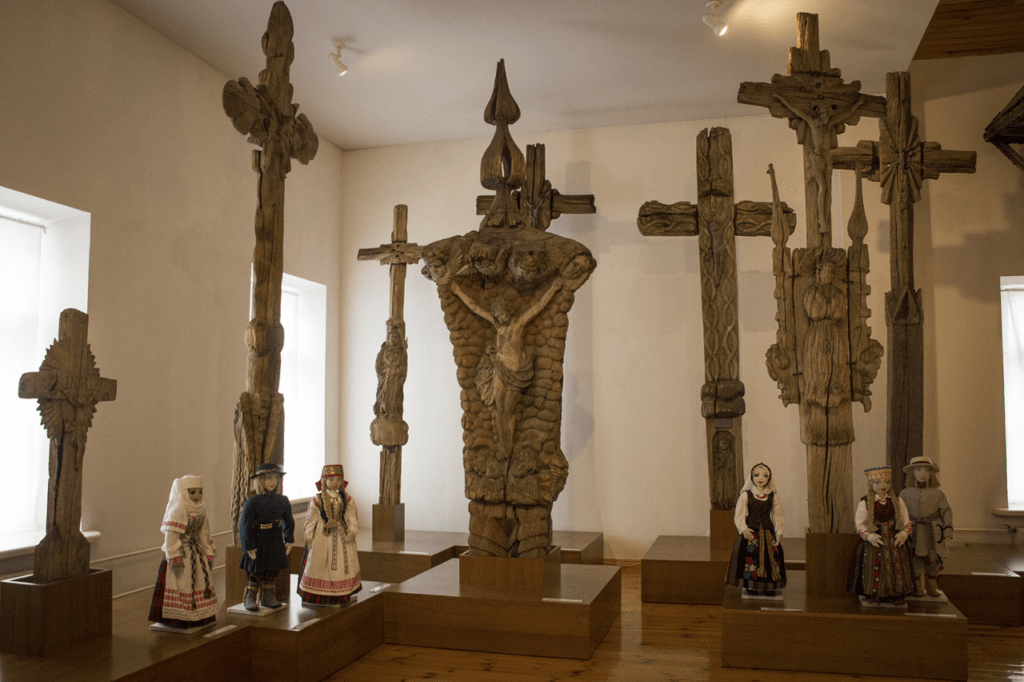
Vincas Svirskis, one of Lithuania’s most renowned cross-makers and one of the most talented creators of traditional Lithuanian folk monumental art, was born in the village of Glitėnai, in the Krekenava district, on 28 January 1835. His biography is shrouded in legend and can only be pieced together from the accounts of those who knew him. His image has survived only in oral tradition, passed down from one person to another. Self-taught, a loner with no permanent roof over his head, he was considered an eccentric in his own time. He spent his entire life travelling on foot from village to village, as if marking his path: stopping wherever people wished to adorn their farmsteads and roadsides with his marvellous handiwork, or to commemorate important events in their lives. The priests did not value Svirskis’ crosses, calling them ‘idols’ and refusing to consecrate them, as many of the saints depicted were peasant figures (their sanctity emphasised only by their attributes), and sometimes the saint was depicted as a self-satisfied, haughty gentleman with a sinner kneeling at his feet, begging for forgiveness. It is believed that V. Svirskis attended the parish school in Krekenava and began carving whilst working as a shepherd. During the years when the press was banned, he maintained contact with book smugglers. V. Svirskis’s works adorned Krekenava, Surviliškis, Ibutonis, Žibartonis, Miegėnai, Pakruostė, Josvainiai, Krakes, Grinkiškis, Gudžiūnai, Vandžiogala, Babtai and other villages.