A WOODEN SPOON FROM KĖDAINIAI
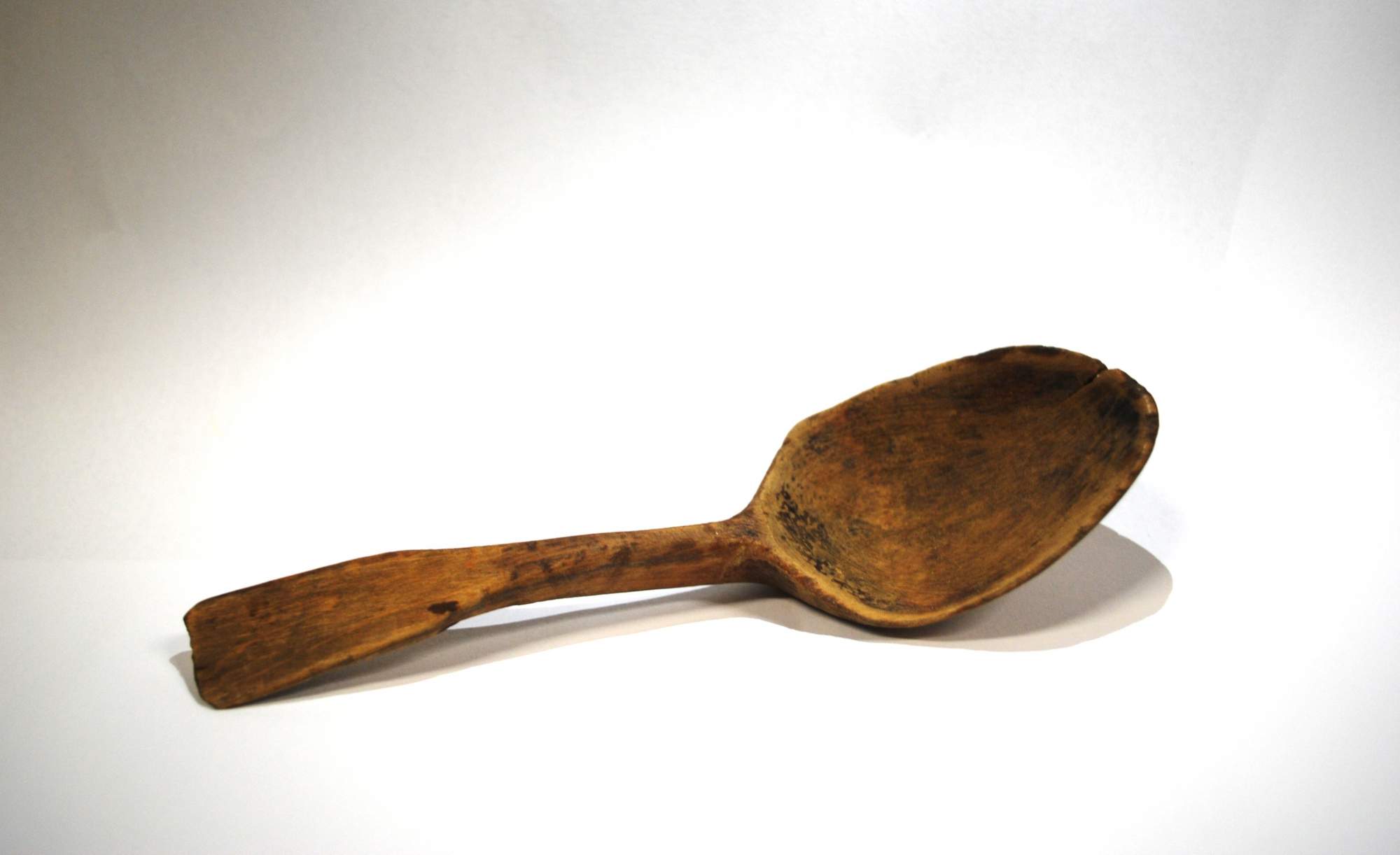
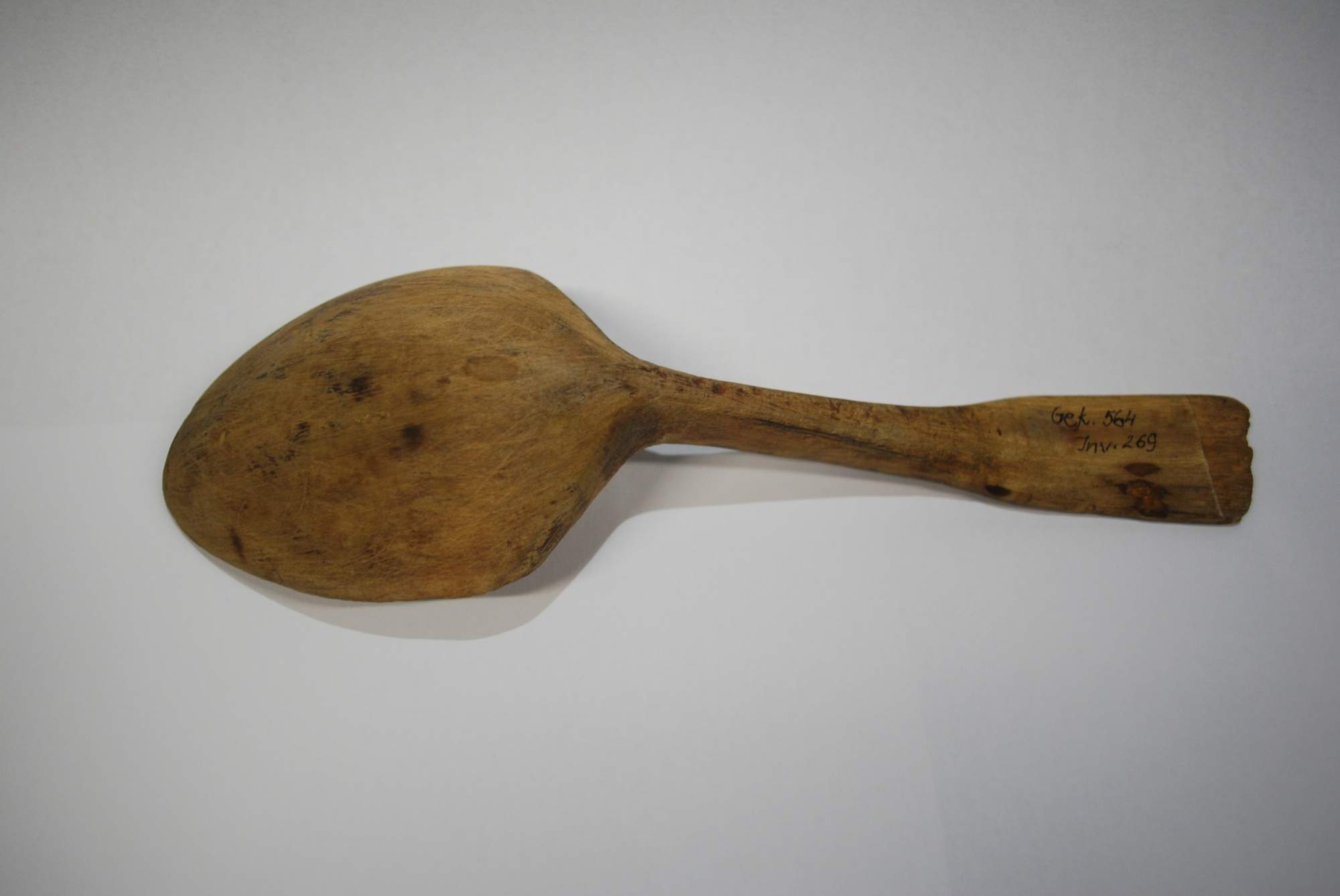
In the autumn, whilst a new storm drain was being dug in Kėdainiai’s old town, the excavator’s bucket struck not a stone, but something light. The worker, upon seeing the wooden object, laughed at first – it was a spoon. A simple one, made of birch, worn but not rotten. Strange – the wood must have been old. Very old.
It was only later, at the museum, upon examining the cross-section, that it became clear: this was not from the 19th or even the 18th century. The wood was Swedish birch, and the carving style was characteristic of 17th-century Scandinavia.
How did a Swedish spoon end up in Kėdainiai?
The year was 1656. Kėdainiai – a town on the border. A town that had already chosen a side. Here, on the Radvilos’ estates, talk of a treaty with the King of Sweden was still in the air, but on the streets it was drowned out by the footsteps of hungry soldiers.
Jonas Lindholm, an officer in the Swedish garrison, lived in a house near the Nevėžis. Not an occupier – at least, that is what he kept telling himself. He had been sent not to fight, but to observe, to ensure, to pass on information. And to safeguard a document that was not meant to exist.
Lindholm was no fool. He knew that the alliance between the Swedes and the Radvilos hung by a thread. One wrong letter, one forged signature – and the war would cease to be political and become personal. That is why he did not keep the secret in a chest, in a sack, or on his person. He kept it…… in the kitchen, in a wooden spoon.
The spoon had been carved by his brother whilst still in Sweden. At first glance, it was nothing out of the ordinary. However, its handle was hollow. Inside was a thin strip of paper, rolled up and coated with wax. A message, written not in ink but in charcoal: names, dates, amendments to the treaty, which neither the Polish szlachta nor the Lithuanian nobility were to find out about.
In Kėdainiai, Lindholm met Elžbieta, the daughter of a local chemist. She spoke German, Polish and… a little Swedish. Through her, he realised that the town was abuzz with rumours. That someone was searching. That someone already knew the Swedish envoy was hiding more than just letters.
One night, when the Nevėžis had swollen from the downpours, Lindholm heard a knock. Not a soldier’s. Too quiet. He realised – it wasn’t the Swedes.
He had a minute.
A spoon lay on the table. He picked it up, looked at the handle, then at Elžbieta. She
understood everything without a word.
‘Under the threshold,’ she whispered.
―
Lindholm didn’t make it in time. The door burst open. He hid the spoon where no one would look – in the pit of the outdoor toilet, underground, mixed with ashes and mud. In a place where secrets are safest when forgotten.
No one ever found Lindholm’s body. Officially, he was ‘missing’. Unofficially, it suited someone that he would never speak out again.
The war ended. The Swedes withdrew. The town recovered. The house collapsed; the site was filled in, rebuilt and forgotten.
All that remains is a spoon.
Today, museum staff look at it through the glass. The handle is empty. The paper has long since disintegrated. But X-rays show that the inside was deliberately hollowed out.
And on the handle – a barely visible scratch. Not an ornament. The letter L. Someone in Kėdainiai kept a secret for three and a half hundred years.
And it has survived not in documents, not in chronicles, but… in a spoon that was waiting for someone to start digging again.
The archaeological find described is real, but the story associated with it is a literary interpretation.